
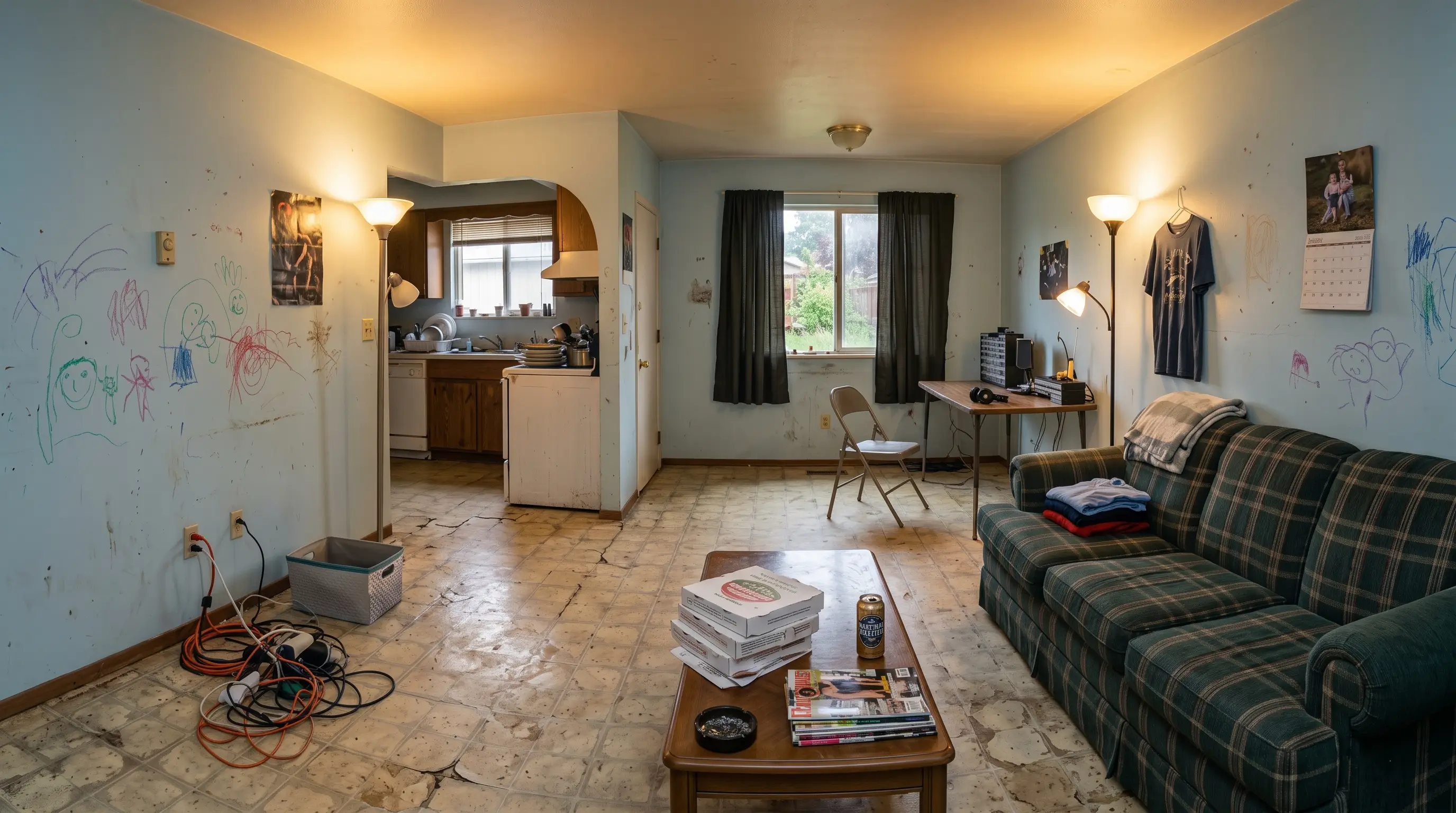
A lease violation notice sits half-drafted in an owner's inbox for three weeks because the tenant seemed apologetic when confronted about it in person. That gap between noticing a problem and actually documenting it is where most disputes gain their footing, and it rarely stays limited to one type of issue.
Rent, maintenance, and lease compliance all tend to unravel the same way once follow-through slips, which is exactly why understanding Connecticut's landlord-tenant rules matters before a small gap turns into a legal one.
Key Takeaways
- A single unpaid rent cycle left unaddressed often turns into a formal eviction filing.
- Delayed maintenance requests turn cheap fixes into expensive repairs within weeks.
- Loose screening standards at move-in create problems that surface later in the lease.
- Owners who document every issue in writing hold a stronger position if a dispute escalates.
- Ongoing professional oversight catches warning signs while they're still manageable.
Three Stages of an Unpaid Rent Cycle
Most rent problems don't begin as a crisis. They begin with a single missed payment an owner decides to let go, and from there the situation tends to move through a fairly predictable sequence.
- The first missed payment gets excused verbally. A tenant offers a reasonable explanation, and no written notice or dated record follows.
- A second missed payment becomes routine. The owner is now relying on memory and verbal reminders instead of a documented timeline.
- Formal notice arrives too late. Connecticut's eviction procedures require specific steps in a set order, and skipping the early ones adds real time to a case that should have moved faster. Our overview of Connecticut's eviction process covers exactly what each stage requires.
Nationally, landlords filed 1.23 million eviction cases in 2025 across the tracked cities and states, and a large share of those filings trace back to a payment issue that sat unaddressed for months before anyone acted.
When a Maintenance Request Sits Too Long
A work order that waits a few weeks rarely stays a small job. Here's how three common complaints tend to unfold once they've been pushed aside.
A Ceiling Stain Nobody Scheduled
A tenant flags a water mark, and the request gets pushed back week after week. By the time anyone shows up, the drywall has softened, and the fix now involves insulation replacement and a mold check.
A Heating Complaint That Waited Through the First Cold Snap
A tenant reports weak heat in early fall, and the owner figures it can wait until the schedule clears. It doesn't. The system fails during the season's first real cold stretch, turning a routine service call into an emergency dispatch at a much higher rate.
A Slow Drain Left Alone for Weeks
It never feels urgent, so it sits. Water backs up more each time, and the eventual fix involves clearing a fully blocked line rather than a quick treatment that would have solved it early on.
Owners can rely on our maintenance support team to keep requests like these from stalling in the first place.
Fair Housing Missteps That Start as Simple Oversights
A lot of what turns into a fair housing complaint doesn't begin with bad intent. It begins with inconsistency that nobody thought to document.
- An advertisement uses language that unintentionally signals a preference for certain tenants.
- One applicant gets asked additional questions that another applicant wasn't asked.
- A requested accommodation gets delayed without a documented reason for the delay.
Each of these can trigger a complaint regardless of intent, and staying current on fair housing requirements protects owners from the kind of oversight that's easy to miss until it's already a problem.
Enforcing Lease Terms: Two Approaches Compared
| Situation | Consistent enforcement | Enforcement left inconsistent |
|---|---|---|
| Unauthorized pet | Addressed in writing within days | Becomes a recurring, undocumented issue |
| Extra occupant | Lease amendment or removal required promptly | Occupancy creeps upward with no record |
| Repeated parking violation | Warning issued, pattern tracked | Tenant assumes the rule no longer applies |
| Noise complaints from neighbors | Logged and addressed directly | Complaints pile up until a neighbor leaves |
Owners who apply the same standard every time tend to keep tenants longer than owners who let small things slide. Managing all of this without support is more demanding than it looks, and our breakdown of the real challenges of self-managing covers what that workload actually involves.
The Quiet Cost of Managing Without a System
Owners handling everything solo often don't notice a slide until it's already a real problem. A few gaps show up more than any others.
- Payment history lives in a notebook or scattered text messages, so a missed payment gets forgotten within weeks.
- Maintenance requests come in by phone with no written log, leaving no record of how long an issue has actually been open.
- Lease violations get noticed once and never written down anywhere useful.
- Communication bounces between text, email, and phone calls, with nothing living in one place.
Industry benchmarks show general maintenance requests took a median of 14.8 days to close across the single-family rental sector, and that gap is exactly where an untracked system lets small issues turn expensive. Owners curious where their own properties stand can start with a free rental analysis.
What Consistent Oversight Actually Changes
PMI Landstar tracks payment history, maintenance activity, and lease compliance in one place, so a missed payment or an overdue repair gets flagged while it's still manageable. Owners interested in seeing this in action can explore our resources for owners to understand what day-to-day oversight looks like.
FAQs about Escalation Patterns in Fairfield, CT
How do I know if a tenant's request for flexibility crosses into a pattern worth addressing?
A single request tied to a specific, verifiable circumstance is usually reasonable to accommodate. A second or third similar request within a short window signals a pattern that deserves a direct conversation and written documentation.
What's the safest way to phrase a rental listing to avoid a fair housing issue?
Focus listing language strictly on the property itself, its features, and lease terms. Avoid any wording that references who might be a good fit for the space, since that framing can unintentionally exclude protected groups.
Should I treat a maintenance complaint differently if it's the tenant's second time reporting the same issue?
Yes. A repeat complaint about the same issue usually means the original repair didn't address the root cause. Bring in a specialist rather than sending the same technician back for another quick fix.
How do I handle a lease violation when two tenants on the same lease disagree about what happened?
Address the lease terms directly rather than trying to referee the disagreement between tenants. Document what each party reports and apply the same consequence regardless of which tenant is technically at fault.
What's a reasonable timeline for following up after sending a tenant a written warning?
Two weeks is generally enough time to see whether the tenant has corrected the issue. If the violation continues past that point, it's usually time to move toward a more formal next step.
Where the Real Difference Shows Up
None of the situations covered here require a complicated fix. A rent notice sent on time, a repair scheduled the week it's reported, a fair housing policy applied consistently, each one is a small habit that prevents a much higher cost later.
PMI Landstar builds these habits into daily management for every property we oversee. When a tenant situation has already moved past what documentation and conversation can resolve, start the eviction process with a team that knows how to move it forward correctly.