
Key Takeaways
- Strict Legal Adherence is Required: Landlords must follow state law, serve proper notice, and comply with every step of the legal process, because any mistake can delay the eviction process in CT or result in a default judgment being entered against both the landlord and the case itself being dismissed. This includes ensuring the tenant receives the correct appearance form and understanding how other tenants may be affected during shared occupancy.
- Specific Notice Periods Apply: A notice to quit for unpaid rent or lease violations must match connecticut law, and the notice specifies the reason for termination. A termination notice must be delivered as a legal document and served by an indifferent person, state marshal, or constable. These rules apply whether the tenant is under a fixed lease or a month to month tenancy.
- Judicial Intervention is Mandatory: Only a state marshal may carry out a summary process execution after the superior court issues a court order for immediate possession, following a court hearing, hearing date, and required court procedures. The marshal may charge state marshal fees as part of the enforcement.
- Evictions require precise documentation: Every step, from the written notice to the summary process complaint, must follow the rules of the judicial branch, including the return date, legal holidays, court forms, and the complaint form filed at the clerk's office in the correct judicial district.
Evictions are sometimes an unavoidable part of property management. When tenant fails to pay rent, violate rental agreement/written lease terms, or otherwise break the rules of a rental property, landlords may need to take legal action to regain possession of the property through the eviction process.
In Connecticut, eviction is legally referred to as a ‘summary process’, which is substantially the same act described in connecticut eviction process guidelines. This follows a structured legal process that landlords must follow carefully. Skipping steps or failing to provide proper notice can delay the process or cause a case to be dismissed by the court.
For property owners and landlords, understanding the connecticut eviction timeline can help ensure that tenant issues are handled legally and efficiently.
It is also important to understand how this fits into the broader scope of Connecticut Landlord Tenant Law to ensure all rental practices remain compliant with state regulations. Below is a detailed overview of the eviction process in Connecticut from PMI Landstar.
Are you prepared for your next vacancy?
Common Legal Reasons for Eviction in Connecticut
Connecticut law allows landlords to begin the eviction process for several legally recognized reasons.
Some of the most common include:
- Nonpayment of rent
- Lease violations
- Serious nuisance or illegal activity: including illegal sale
- Property damage or neglect
- Expiration of a lease or holdover tenancy
For example, landlords may pursue eviction if a tenant stops paying rent, violates the specific terms of the lease agreement, or tenant remains in the property after the lease term ends. Understanding the legal grounds for eviction is important because the notice requirements and timelines vary depending on the specific reason for the filing.
Step 1: Provide the Required Notice to the Tenant
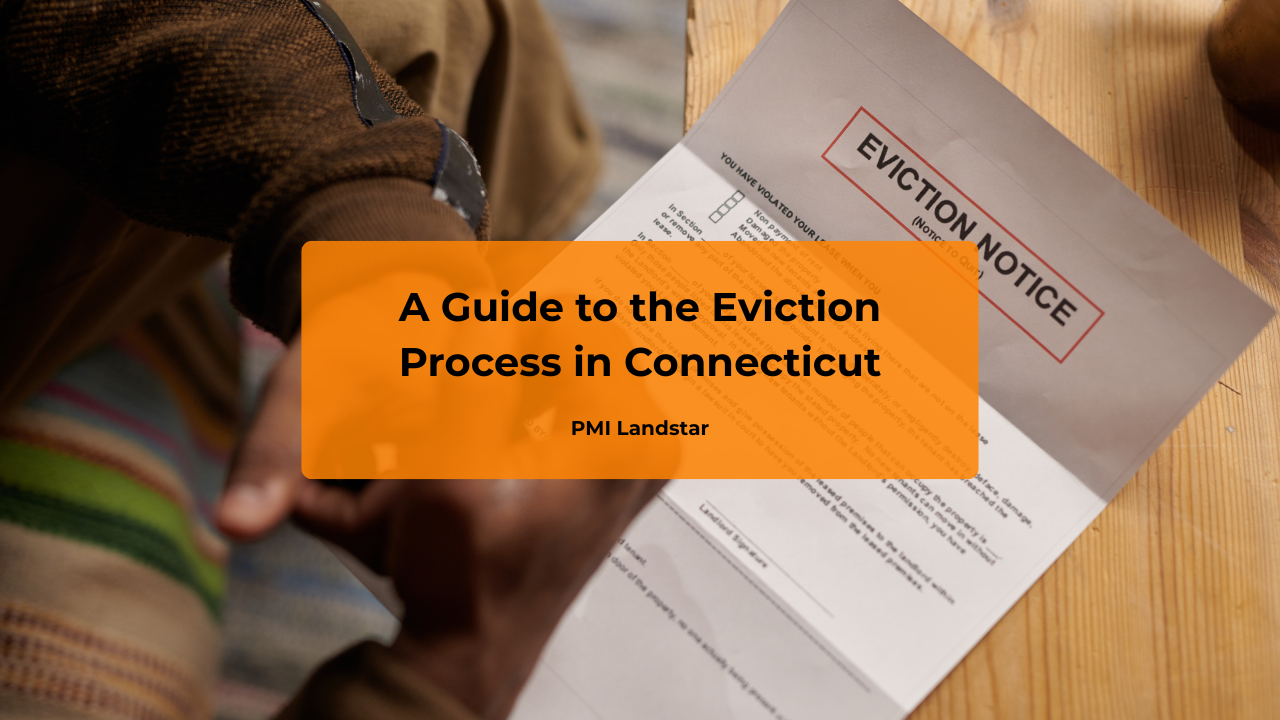
The eviction process in Connecticut begins with the delivery of a notice to quit possession, sometimes called an original notice. This document informs the tenant that the landlord serves notice and intends to terminate the tenancy. It also states that the tenant must either resolve the issue or move out of the premises. Most eviction proceedings require at least three days of notice before the landlord files a formal court case.
It also states that the tenant must either resolve the issue or move out of the premises. Most eviction cases require at least three days of notice before the landlord files a formal court case.

Different situations require different eviction notices. For nonpayment of rent, the landlord may issue a 3‑day notice to quit after the state grace period ends. The length of the grace period typically depends on the specific lease type.
For general lease violations, tenants may receive a 15‑day Notice to Remedy or Quit. This allows them time to correct the violation before the eviction proceeds further. In cases involving serious nuisance or illegal sale, a 3‑day notice may be issued immediately without any opportunity to correct the behavior.
The notice must be properly delivered to the tenant. This is typically handled by a state marshal, constable, or an authorized officer. The document must clearly state the reason for the eviction to be valid.
Step 2: File a Summary Process Case With the Court
If the tenant does not comply with the notice or move out within the required timeframe, the landlord may begin the formal eviction lawsuit. This step involves filing a summary process complaint with the Connecticut Superior Court. This is the official beginning of the judicial portion of the eviction.
After filing:
- The court assigns a return date for the case
- The tenant must receive official service of the summons and complaint
- The tenant may file an appearance to contest the eviction
Filing an eviction case also requires payment of a court filing fee.
Step 3: Serve the Tenant With Court Documents
After the landlord files the case, the tenant must receive the court documents through official service. In Connecticut, eviction documents must typically be served by a state marshal or constable, not by the landlord directly.

These documents usually include:
The Summons and Complaint
A copy of the Notice to Quit
Any supporting documents related to the eviction claim
Once served, tenants have a limited amount of time to respond to the court and file an appearance if they plan to contest the eviction.
Step 4: Attend the Court Hearing
If the tenant contests the eviction, the case will proceed to an eviction hearing in the housing session of the Connecticut superior court, sometimes referred to as housing court.
During the hearing:
The landlord presents evidence such as the lease agreement, payment records, or documentation of lease violations.
The tenant may present tenant defenses or evidence supporting their case.
After reviewing the evidence, the court decides whether to grant the landlord possession of the rental unit. The court date is set by the court and must be followed precisely.
Step 5: Judgment and Order for Possession
If the court rules in favor of the landlord, it will issue a court order for possession. However, eviction is not immediate. Connecticut law provides a short automatic stay period after the judgment before enforcement can occur.
During this time, tenants may have an opportunity to move out voluntarily or request additional time from the court under certain specific circumstances.
Step 6: Execution of the Eviction
If the tenant does not move out after the court decision and the waiting period, the landlord can request a summary process execution. A state marshal then carries out the eviction by physically removing the tenant and tenant's belongings from the property. At this point, the landlord finally regains legal possession of the rental unit.
Belongings may be moved to a storage facility designated by the town’s chief executive officer, and storage costs may apply. If unclaimed, items may be sold at public auction. The marshal may be accompanied by a police officer.
Don’t risk a dismissed court case due to a filing error.
How Long Does the Connecticut Eviction Process Take?
The eviction timeline in Connecticut varies depending on the situation, but the process generally includes several stages:
- Notice to Quit is issued
- Landlord files a Summary Process case
- Court hearing takes place
- Judgment is issued
- Eviction execution occurs if the tenant does not vacate
Because the process involves court procedures, tenant responses, and required waiting periods, it can take several weeks or longer to complete.
Why Proper Legal Procedures Matter
Evictions must follow state law precisely. If landlords fail to serve notice correctly, file paperwork properly, or follow court procedures, the eviction case may be delayed or dismissed.

Proper documentation, accurate notices, and compliance with state law are essential to successfully regaining possession of a rental property. This is especially important for commercial property owners, who must follow the same civil process rules.
Professional Property Management Can Help
Handling evictions can be stressful and time‑consuming for property owners. Working with experienced property managers can help ensure that every step of the process is handled correctly.
PMI Landstar helps landlords manage difficult tenant situations while ensuring compliance with Connecticut landlord-tenant laws. If you need help managing rental properties or handling tenant issues, professional property management can help protect your investment.
Stop stressing over difficult tenancies and legal paperwork. If needed, tenants may seek assistance from legal aid, legal assistance, or a free lawyer through the judicial branch website.